In today’s financial world, your credit score speaks before you do. Whether you are applying for a home loan, a personal loan, or even a simple credit card, lenders almost always look at your credit score first. Yet, many people still don’t fully understand what a credit score is, how it works, or how to improve credit score in a sustainable way.
A good credit score is not just about getting loans approved. It directly impacts the interest rates you receive, your credit limits, and your overall financial credibility. A poor score, on the other hand, can result in loan rejections, higher interest rates, and limited financial opportunities.
This article is a complete, practical guide on how to improve credit score using proven, real-world strategies. We will explain credit score basics, the factors that affect it, common mistakes to avoid, and how long it realistically takes to see improvement. By the end, you’ll have a clear roadmap to build and maintain a strong credit profile.
Understanding Credit Score Basics
What Is a Credit Score?
A credit score is a three-digit number that reflects your creditworthiness. It represents how responsibly you have handled borrowed money in the past and how likely you are to repay future debts on time. Lenders use this score to assess risk before approving loans or credit cards.
The higher your credit score, the more trustworthy you appear to financial institutions.
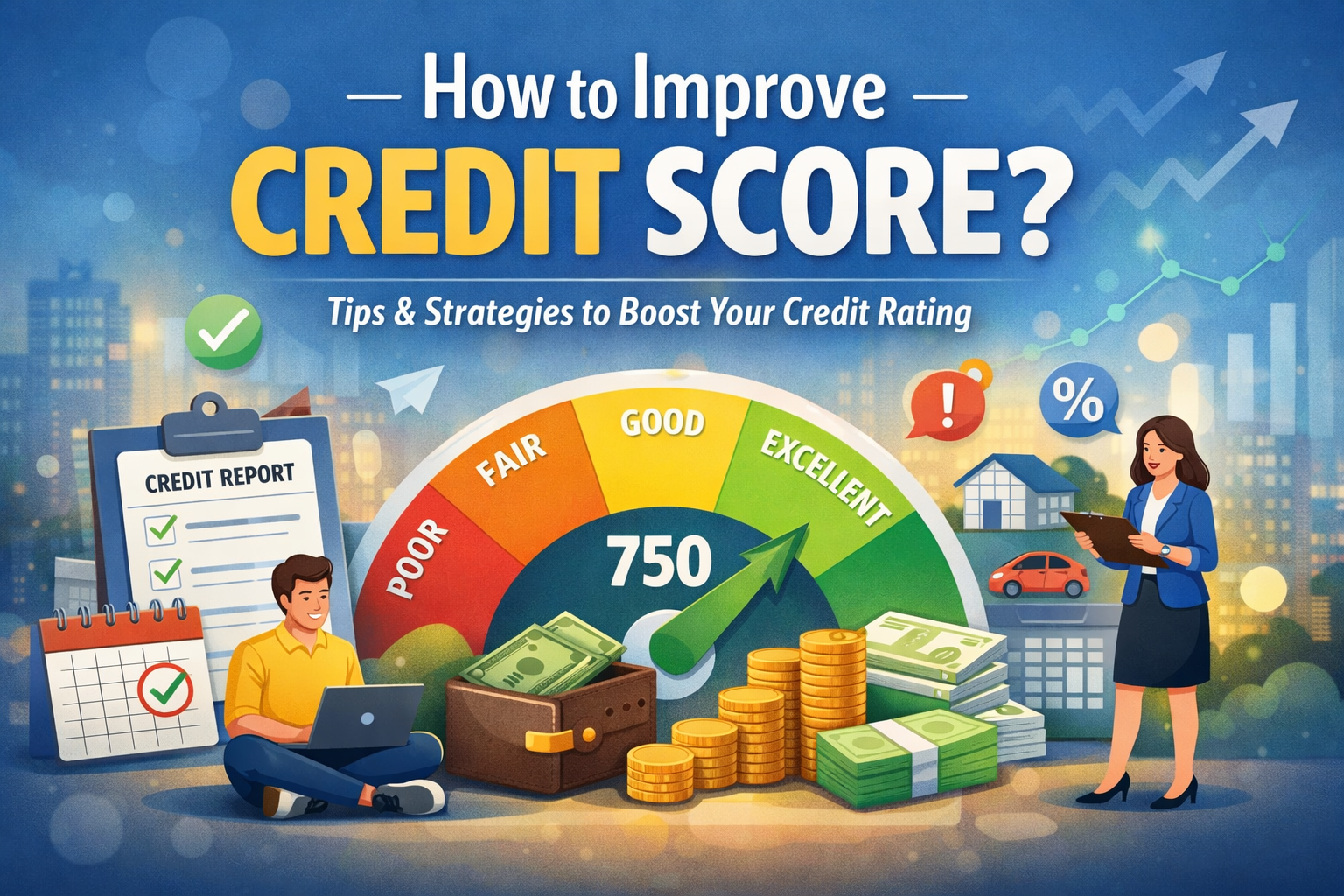
Common Credit Score Ranges
Although scoring models may vary slightly, credit scores are generally categorized as:
- 300–579: Poor credit score
- 580–669: Fair credit score
- 670–739: Good credit score
- 740–799: Very good credit score
- 800 and above: Excellent credit score
A score above 750 is usually considered ideal for securing loans at the lowest interest rates.
Major Credit Bureaus and Score Calculation
Credit bureaus collect your financial data from banks and lenders and calculate your score using complex algorithms. These bureaus evaluate your repayment behavior, credit usage, and borrowing patterns to generate a score that lenders rely on.
Key Factors That Affect Your Credit Score
Understanding the factors that influence your score is essential if you truly want to learn how to improve credit score effectively.
Payment History
Your payment history is the single most important factor. It shows whether you pay your EMIs and credit card bills on time.
- Late payments
- Missed EMIs
- Loan defaults
All of these can severely damage your credit score.
Credit Utilization Ratio
Credit utilization refers to how much of your available credit limit you are using.
For example, if your credit card limit is ₹1,00,000 and you use ₹70,000, your utilization ratio is 70%. High utilization signals financial stress to lenders.
Length of Credit History
The longer your credit history, the better it is for your score. Older accounts provide more data about your financial behavior and show stability.
Credit Mix
A healthy mix of different types of credit improves your score. This includes:
- Secured loans (home loan, car loan)
- Unsecured loans (personal loan, credit cards)
New Credit Inquiries
Every time you apply for a loan or credit card, a hard inquiry is recorded. Too many inquiries in a short period can reduce your score.
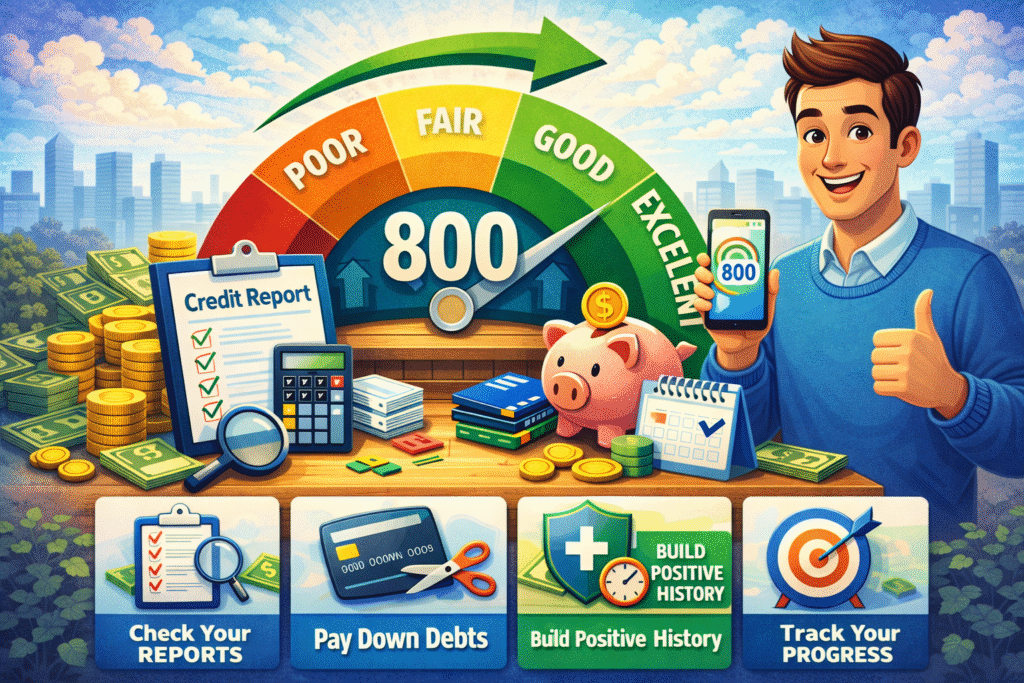
Check Your Credit Report Regularly
Why Reviewing Your Credit Report Is Important
Many people assume their credit report is always accurate, but errors are surprisingly common. Even a small mistake can drag your score down unnecessarily.
Regularly checking your credit report helps you:
- Track your credit progress
- Identify incorrect entries
- Detect identity theft early
How to Obtain a Free Credit Report
You can access your credit report for free from credit bureaus at least once a year. Reviewing it does not impact your score.
Identifying Errors or Fraudulent Activities
Look closely for:
- Loans you never took
- Incorrect late payment records
- Wrong personal details
- Duplicate accounts
Steps to Dispute Inaccuracies
If you spot an error:
- Raise a dispute with the credit bureau
- Provide supporting documents
- Follow up until correction is confirmed
Correcting errors alone can sometimes lead to a quick credit score boost.
Pay Your Bills on Time
Why Timely Payments Matter the Most
If you want to know how to improve your credit score, this is the most critical habit to master. Even a single late payment can negatively impact your score for months.
Consequences of Late or Missed Payments
Late payments can result in:
- Drop in credit score
- Late payment penalties
- Higher interest rates in future
- Loss of lender trust
Tips to Avoid Missing Due Dates
Simple strategies include:
- Setting up auto-debit for EMIs
- Using calendar reminders
- Paying bills immediately after salary credit
Consistency here creates long-term credit strength.
Reduce Credit Card Utilization
What Credit Utilization Ratio Means
Credit utilization measures how much of your available credit you are using at any given time. Lower utilization shows disciplined financial behavior.
Ideal Utilization Percentage to Maintain
Experts recommend keeping utilization below 30% of your total credit limit. Staying under this threshold significantly helps improve credit score.
Strategies to Lower Utilization
Some practical methods include:
- Paying credit card balances in full
- Making multiple payments within a billing cycle
- Requesting a credit limit increase (without increasing spending)
Avoid Unnecessary Credit Applications
How Hard Inquiries Affect Your Credit Score
Each credit application triggers a hard inquiry. Too many inquiries suggest credit-hungry behavior and reduce lender confidence.
When Applying for New Credit Makes Sense
Apply for credit only when:
- You genuinely need it
- Your financial situation supports repayment
- You have researched the lender’s eligibility criteria
Managing Credit Responsibly
Avoid borrowing simply because credit is available. Responsible borrowing is key to long-term credit health.
Maintain a Healthy Credit Mix
Importance of Different Types of Credit
A good credit mix shows that you can handle multiple forms of debt responsibly.
Examples include:
- Home loans
- Auto loans
- Credit cards
Installment Loans vs Revolving Credit
- Installment loans have fixed EMIs and tenure
- Revolving credit (credit cards) allows flexible repayment
A balance between both is ideal.
Avoid Loans Just for Credit Mix
Never take a loan solely to improve the credit mix. Unnecessary debt can backfire and harm your financial stability.
Build Credit History Over Time
Why Patience Is Essential
Improving credit score is not an overnight process. It requires consistent, responsible behavior over time.
Keeping Old Accounts Active
Old credit cards and loans contribute positively to your credit age. Closing them unnecessarily can reduce your score.
Responsible Long-Term Credit Behavior
Long-term habits that help include:
- Paying bills on time
- Keeping balances low
- Avoiding impulsive borrowing
Deal With Outstanding Debts
Prioritize High-Interest Debts
High-interest debts, especially credit card balances, should be cleared first to reduce financial strain.
Loan Restructuring or Settlement Options
If repayment becomes difficult:
- Speak to your lender early
- Explore restructuring options
- Consider settlement only as a last resort
Seeking Professional Financial Advice
A financial advisor can help create a realistic repayment plan without damaging your credit score further.
Common Mistakes to Avoid
Many people unknowingly harm their credit score by making avoidable mistakes.
- Closing old credit cards unnecessarily
- Ignoring small dues or penalties
- Co-signing loans without understanding liability
- Maxing out credit limits
- Missing payments due to poor tracking
Avoiding these errors is just as important as following best practices.
How Long Does It Take to Improve a Credit Score?
Short-Term vs Long-Term Improvements
- Minor improvements can be seen within 2–3 months
- Significant improvements usually take 6–12 months
Factors Influencing Recovery Time
- Severity of past defaults
- Current repayment behavior
- Credit utilization levels
- Accuracy of credit report
Setting Realistic Expectations
Consistency matters more than speed. Focus on steady improvement rather than quick fixes.
Conclusion
Learning how to improve credit score is one of the most valuable financial skills you can develop. A strong credit score opens doors to better loan approvals, lower interest rates, and greater financial freedom.
By paying bills on time, keeping credit utilization low, avoiding unnecessary debt, maintaining a healthy credit mix, and monitoring your credit report regularly, you can steadily build a strong and reliable credit profile.
Improving your credit score is not about perfection — it’s about discipline, patience, and smart financial decisions. Start today, stay consistent, and your future self will thank you.
Top 5 FAQs on How to Improve Credit Score
1. How fast can I improve my credit score?
Minor improvements can be seen in a few months, but major improvements usually take 6 to 12 months of disciplined behavior.
2. Does checking my credit score reduce it?
No. Checking your own credit score is a soft inquiry and does not affect your score.
3. What is the ideal credit utilization ratio?
Keeping utilization below 30% of your total credit limit is ideal for improving credit score.
4. Can closing credit cards improve my credit score?
No. Closing old cards often reduces credit age and available credit, which can lower your score.
5. Is paying the minimum due on credit cards enough?
Paying the minimum avoids late fees, but carrying high balances increases utilization and hurts your score over time.