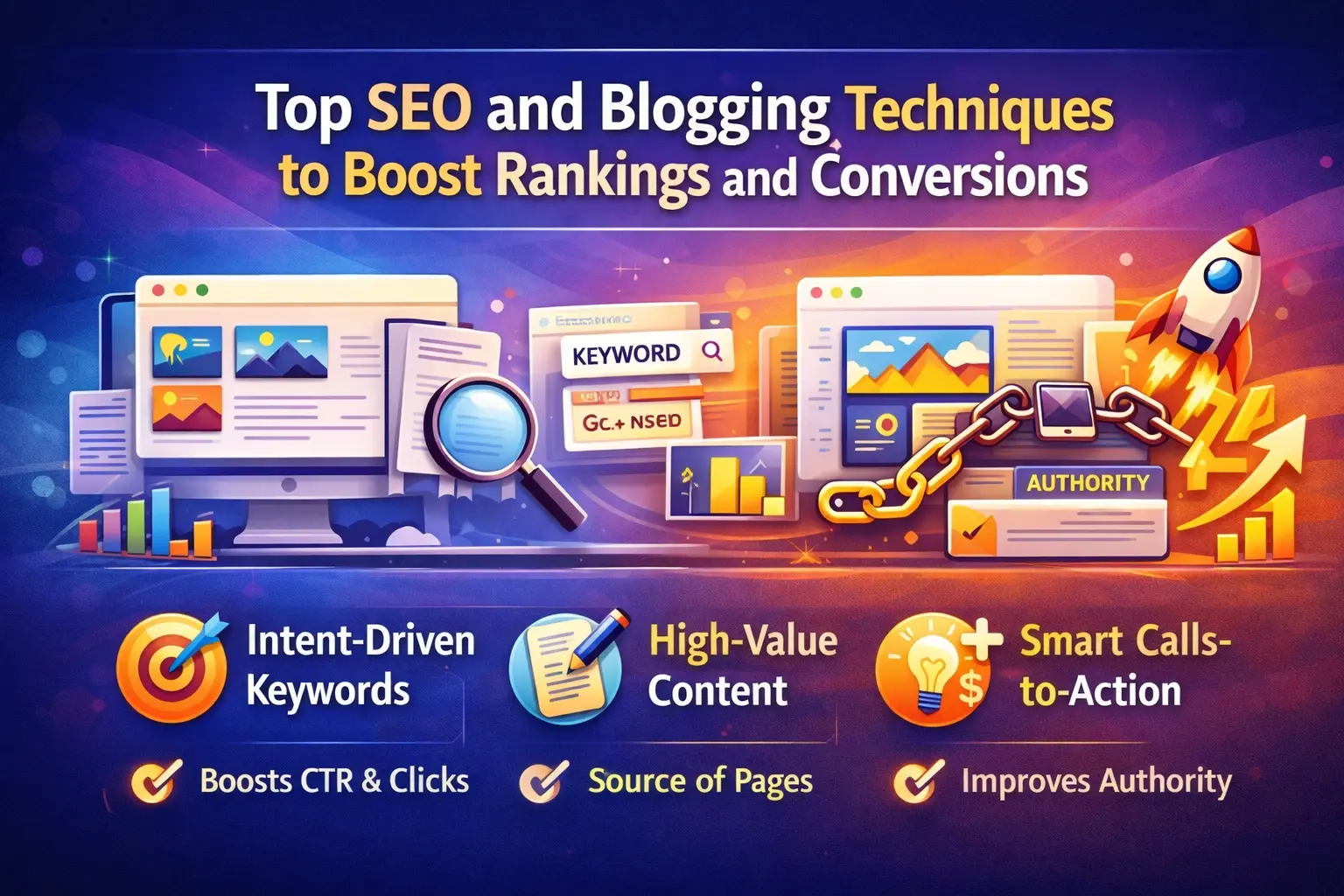
Publishing content consistently but still not seeing traffic or conversions? That’s a situation many website owners face—and in most cases, the issue isn’t effort, it’s strategy.
If your blog isn’t generating results yet, you’re likely closer than you think. Often, it only takes a few strategic improvements—not a complete overhaul—to start seeing measurable growth.
Search engines have evolved significantly. They no longer reward content that simply includes keywords. Instead, they prioritize content that demonstrates real expertise, solves user problems, and keeps readers engaged.
In practical terms, your blog needs to do two things exceptionally well:
- Attract the right audience
- Guide them toward a meaningful action
This guide focuses on proven, real-world strategies that improve rankings, increase engagement, and drive conversions—without relying on outdated tactics.
Understanding the Connection Between SEO and Blogging
What SEO Really Means in Blogging
Search optimization is no longer about inserting keywords—it’s about clarity, structure, and usefulness.
From practical experience, the blogs that consistently rank well share three key characteristics:
- Clear structure with logical headings
- Content that fully answers a specific query
- Strategic keyword placement without overuse
When these elements align, search engines can confidently rank your content because it directly matches user intent.
Why Blogging Still Drives Organic Growth
Many websites depend on static pages and expect traffic to grow. In reality, blogs are what create consistent momentum.
Each article acts as a new entry point, helping your site rank for additional queries and attract users at different stages of their journey.
In one practical case, a blog post targeting a long-tail query moved to page one within 45 days after improving internal linking and content structure. Notably, the biggest impact came from improving readability and intent alignment—not adding more keywords.
A single well-optimized article can:
- Generate consistent traffic for months
- Rank for multiple related queries
- Build trust before a user takes action
Consistency, not just volume, is what drives sustainable growth.
Keyword Research: Where Most Blogs Go Wrong
Finding Keywords That Actually Convert
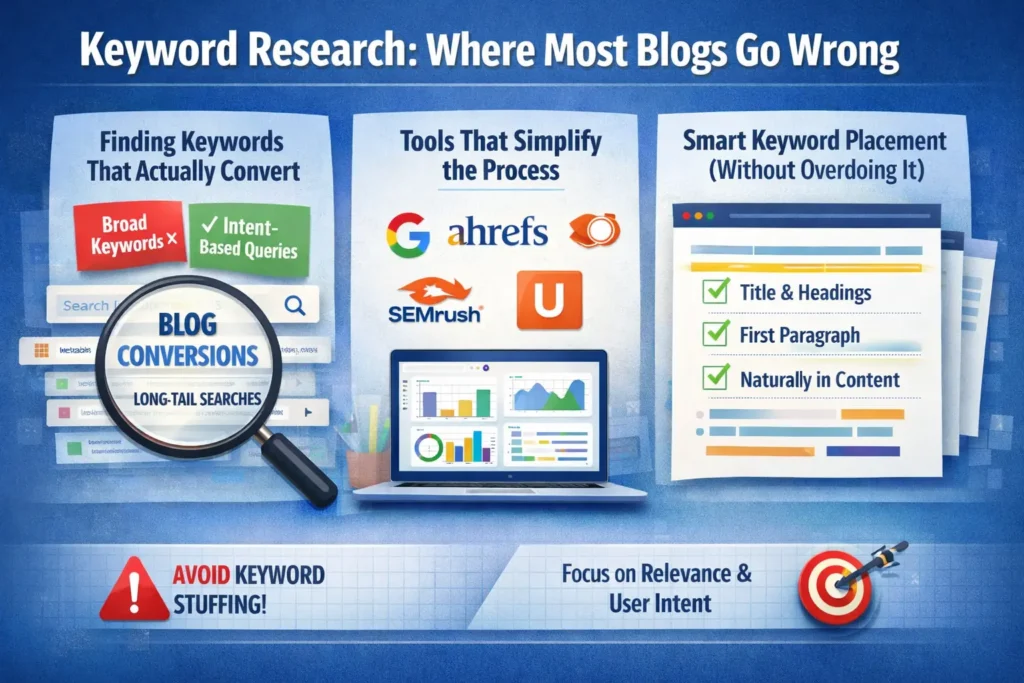
Targeting broad keywords may seem appealing, but they often bring slow or inconsistent results.
A more effective strategy is focusing on intent-driven queries.
For example:
- “Blogging tips” → early-stage exploration
- “How to increase blog conversions” → action-focused intent
This difference directly impacts performance.
Research shows that long-tail keywords account for nearly 70% of total search traffic, and they typically convert better due to their specificity.
These keywords often bring:
- Lower competition
- Higher engagement
- Stronger conversion potential
Tools That Simplify the Process
Platforms like Google Keyword Planner, Ahrefs, SEMrush, and Ubersuggest provide valuable data on search trends, competition, and keyword opportunities.
However, tools alone don’t guarantee results. The real advantage comes from understanding user intent and aligning your content accordingly.
Smart Keyword Placement (Without Overdoing It)
Effective optimization relies on subtle placement rather than repetition:
- Title and primary heading
- Opening paragraph
- Relevant subheadings
Over-optimization can reduce readability and harm performance.
Pro Tip:
Instead of focusing on a single keyword, build content around a topic cluster. This allows your blog to rank for multiple related queries and improves long-term visibility.
Creating Content That Actually Ranks
Write Like You’re Explaining, Not Selling
Readers engage with content that feels helpful—not mechanical.
A simple shift in writing style can significantly improve performance:
- Prioritize clarity over complexity
- Use relatable examples
- Focus on solving real problems
In many cases, rewriting content in a natural tone improves engagement more than adding keywords.
Structure Matters More Than You Think
Even high-quality content can underperform if it’s difficult to read.
Well-structured articles:
- Break information into smaller sections
- Use clear, descriptive headings
- Avoid long, dense paragraphs
This improves both user experience and search visibility.
Depth Wins Over Length
It’s not about writing more—it’s about covering the topic effectively.
Content that answers the main question, related queries, and provides actionable insights naturally performs better, regardless of length.
Insight:
Content structure and intent alignment often have a greater impact on rankings than keyword frequency.
SEO and Blogging Checklist
Before publishing any blog, use this checklist to ensure your content is fully optimized for both search engines and users.
| Step | Task | What to Check | Status |
| 1 | Keyword Research | Target long-tail + intent-based keywords | ☐ |
| 2 | Search Intent | Content matches user intent (info/action) | ☐ |
| 3 | Title Optimization | Clear, benefit-driven, CTR-focused title | ☐ |
| 4 | Meta Description | Compelling summary within 155 characters | ☐ |
| 5 | Introduction Hook | Problem-focused + engaging opening | ☐ |
| 6 | Content Structure | Proper use of H1, H2, H3 headings | ☐ |
| 7 | Content Depth | Covers topic completely (not superficial) | ☐ |
| 8 | Readability | Short paragraphs + easy-to-scan format | ☐ |
| 9 | Keyword Placement | Natural use in headings and intro | ☐ |
| 10 | Internal Linking | Links to relevant blog posts added | ☐ |
| 11 | Image Optimization | Compressed images + alt text added | ☐ |
| 12 | Page Speed | Fast loading (optimized assets) | ☐ |
| 13 | Mobile Optimization | Fully responsive design | ☐ |
| 14 | Call-to-Action (CTA) | Clear and natural next step included | ☐ |
| 15 | External Links | Added authority sources (if needed) | ☐ |
| 16 | Content Update | Latest info and refreshed data included | ☐ |
| 17 | Engagement Elements | Use of visuals, examples, or insights | ☐ |
| 18 | SEO Table Added | Summary table included (for snippets) | ☐ |
| 19 | FAQ Section | 3–5 optimized questions added | ☐ |
| 20 | Final Review | Grammar, clarity, and flow checked | ☐ |
On-Page Optimization That Makes a Difference
Titles and Descriptions That Get Clicks
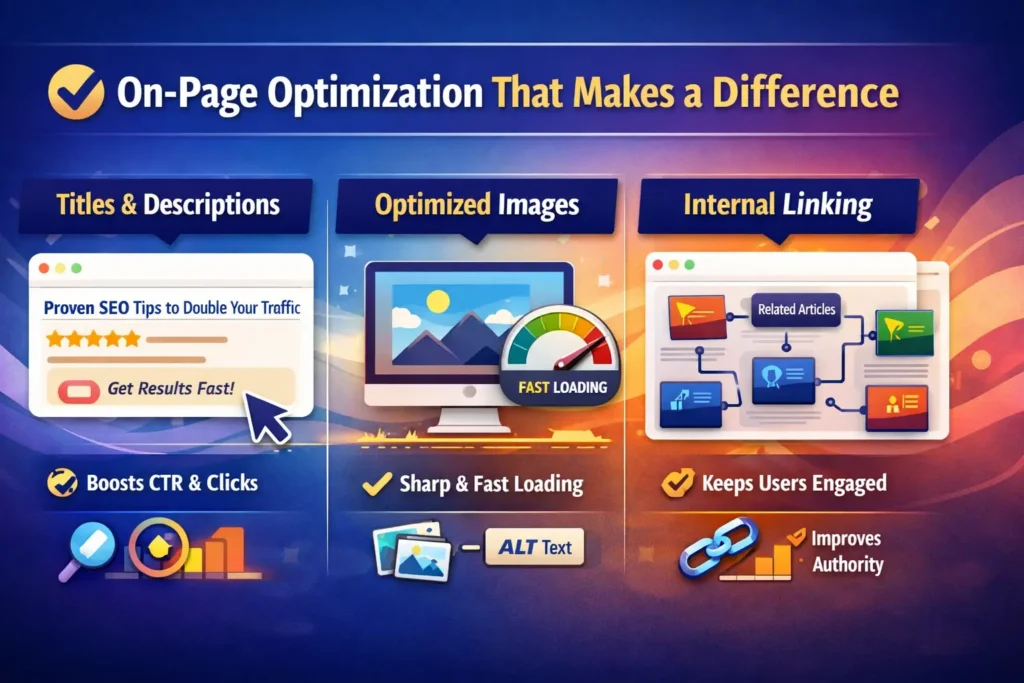
Your title directly influences whether users click on your content.
Compare:
- Weak: “SEO Tips for Blogs”
- Strong: “Proven SEO Techniques That Increased Blog Traffic in 90 Days”
The second example creates curiosity and communicates value.
Images That Support, Not Slow Down
Optimized visuals improve engagement and performance.
From testing:
- Compressed images reduce bounce rates
- Relevant visuals increase time on page
Alt text also helps search engines understand content context.
Internal Linking: An Underrated Strategy
Internal links guide users to related content and help search engines understand your site structure.
In one case, adding strategic internal links increased page views per session significantly and improved rankings within weeks.
Technical Factors You Shouldn’t Ignore
Mobile Experience Comes First
Most users browse on mobile devices. A poor mobile experience often leads to lost traffic before engagement even begins.
Speed Directly Impacts Performance
Slow websites negatively impact both rankings and user behavior.
Optimizations like image compression, efficient coding, and reliable hosting can significantly improve load time.
Security Builds Trust
HTTPS is now a baseline expectation. Secure websites build credibility and improve user confidence.
Turning Traffic Into Conversions
Understanding What the Reader Wants
Not every visitor is ready to act immediately. Effective content guides users through a journey:
- Provide value first
- Build trust
- Introduce the next step
Using CTAs That Feel Natural
Instead of aggressive prompts, use CTAs that feel helpful:
- “Download the checklist”
- “Explore related strategies”
This approach improves conversions without disrupting the experience.
Visual Elements That Keep Users Engaged
Infographics, visuals, and videos simplify complex information and improve retention.
You can also Know more about:
How to start blog and earn money
Promotion and Authority Building
Content Without Promotion Rarely Performs
Publishing content without a promotion strategy is one of the biggest reasons blogs fail—even when the content is high quality.
Sharing content across platforms helps generate initial traction and visibility.
Guest Posting and Outreach
Collaborating with other websites builds authority, attracts backlinks, and expands reach.
Strong relationships within your niche often lead to long-term growth opportunities.
Common Mistakes That Limit Growth
Many blogs underperform due to avoidable issues:
- Targeting the wrong keywords
- Weak content structure
- Ignoring content updates
- Poor mobile experience
Fixing these can lead to noticeable improvements quickly.
Measuring What Actually Matters
Tracking performance helps refine your strategy.
Focus on:
- Traffic growth
- User engagement
- Conversion trends
Tools like Google Analytics and Search Console provide actionable insights.
Pro Tip:
Updating existing content often delivers faster results than publishing new articles—especially if the page already has some authority.
Real Example: Small Optimization, Big Impact
A mid-level blog post was updated by:
- Improving headings
- Adding internal links
- Refreshing outdated sections
Within 60 days:
- Organic traffic increased by ~60%
- Engagement improved significantly
- Rankings moved from page 2 to top 5
This proves that optimization is an ongoing process—not a one-time task.
What’s Changing in SEO and Blogging
AI is Reshaping Content
AI tools can assist with research and structure, but human insight remains essential for originality and depth.
Voice Search is Growing
More users are searching conversationally. Optimizing for natural language queries improves discoverability.
Experience and Trust Matter More Than Ever
Search engines increasingly reward content that reflects real expertise and credibility. Authentic, experience-based content stands out.
Quick Summary: SEO and Blogging Techniques That Drive Results
If you want consistent rankings and conversions, focus on improving user experience first—because search engines prioritize content that keeps users engaged, satisfied, and informed. Once your content delivers real value, optimization helps amplify those results.
The table below summarizes the most effective techniques and how they directly impact both visibility and conversions:
SEO and Blogging Strategy Table
| Strategy Area | Key Action | Why It Matters for SEO | Impact on Conversions | Pro Insight |
| Keyword Research | Target long-tail & intent-based queries | Easier rankings + higher relevance | Brings qualified traffic | Long-tail keywords drive majority of search traffic |
| Content Creation | Write problem-solving, in-depth content | Improves dwell time + ranking signals | Builds trust with readers | Depth matters more than word count |
| Content Structure | Use H1, H2, H3 with clear sections | Helps search engines understand content | Improves readability | Structured content ranks faster |
| On-Page Optimization | Optimize title, meta, headings | Boosts click-through rate (CTR) | More clicks = more leads | Titles directly influence traffic |
| Internal Linking | Link related blog posts strategically | Improves crawlability + authority | Keeps users engaged longer | Reduces bounce rate |
| Image Optimization | Compress images + use alt text | Improves page speed + accessibility | Better user experience | Faster pages perform better |
| Page Speed | Optimize loading time | Core ranking factor | Lower drop-off rate | Even small delays impact engagement |
| Mobile Optimization | Use responsive design | Mobile-first indexing factor | Better mobile engagement | Majority users are mobile |
| User Intent Matching | Align content with search purpose | Improves ranking relevance | Higher conversion probability | Intent matters more than keywords |
| Call-to-Actions (CTA) | Add natural, helpful CTAs | Guides user journey | Increases conversions | Soft CTAs work better |
| Content Updates | Refresh old blog posts regularly | Maintains rankings + freshness | Improves trust & accuracy | Faster results than new content |
| Backlink Building | Guest posting & outreach | Builds authority | Increases credibility | Quality backlinks matter most |
| Content Promotion | Share on social platforms | Drives initial traffic | Expands reach | Helps faster indexing |
| Analytics Tracking | Monitor traffic & behavior | Helps optimize strategy | Improves ROI decisions | Data-driven content wins |
| EEAT Optimization | Show expertise & real examples | Builds trust with search engines | Boosts user confidence | Experience improves rankings |
Conclusion
Long-term success doesn’t come from shortcuts—it comes from combining valuable content, smart optimization, and consistent improvement.
The strategies outlined here are based on real-world performance, not theory. When applied correctly, they help attract the right audience, build trust, and drive meaningful conversions.
Start small, stay consistent, and refine based on data. Over time, these improvements compound into sustainable growth.
Frequently Asked Questions (FAQs)
1. How long does it take to see results?
Most websites begin seeing measurable improvements within 3–6 months with consistent optimization.
2. What type of content performs best?
Content that directly solves user problems and aligns with search intent consistently delivers strong results.
3. Is keyword research still important?
Yes, but understanding intent is now more important than focusing only on search volume.
4. How often should content be updated?
Refreshing content every few months helps maintain rankings and relevance.
5. What drives the best results long-term?
Consistency, user-focused content, and continuous optimization are the key factors behind sustainable growth.