Many beginners enter the world of online earning with excitement, believing that placing a few referral links is enough to generate passive income. Then reality hits: weeks go by, clicks remain low, and commissions never arrive. This is where most people give up.
The truth is, Affiliate Marketing is still one of the most powerful and scalable ways to earn online in 2026—but only when approached strategically.
Unlike traditional businesses, you do not need to create products, manage shipping, or handle customer complaints. Instead, your role is to guide people toward products and services they already need, while earning commissions for successful referrals.
What separates successful affiliate marketers from beginners who fail is not luck—it is trust, consistency, and the ability to create valuable content that helps people make informed buying decisions.
In this guide, you will learn proven strategies used by experienced marketers to grow faster, build authority, and create long-term recurring income.
What Is Affiliate Marketing?
Affiliate marketing is one of the most popular ways to earn money online by promoting products or services created by other companies. In simple terms, it is a performance-based marketing model where you receive a commission whenever someone purchases a product through your referral link.
This business model has become highly popular in 2026 because it allows beginners, bloggers, influencers, and website owners to generate passive income without creating their own products or handling inventory.
For example, if you recommend a web hosting service, online course, or software tool on your website and someone buys through your special tracking link, you earn a percentage of that sale.
How Affiliate Marketing Works Step by Step
Understanding how affiliate marketing works is simple when broken into steps:
1. Join an Affiliate Program
First, you sign up for an affiliate program offered by a company or affiliate network such as Amazon Associates, ShareASale, or CJ Affiliate.
2. Get Your Unique Referral Link
Once approved, you receive a personalized affiliate link that tracks every visitor you send to the merchant’s website.
3. Promote Products Through Content
You promote the product using:
- Blog articles
- Product reviews
- YouTube videos
- Social media posts
- Email newsletters
4. Visitors Click and Purchase
When users click your link and complete a purchase, the system records the sale under your account.
5. Earn Commissions
You earn a commission based on the agreed payout structure, which may be one-time or recurring depending on the program.
The Four Core Players in Affiliate Marketing
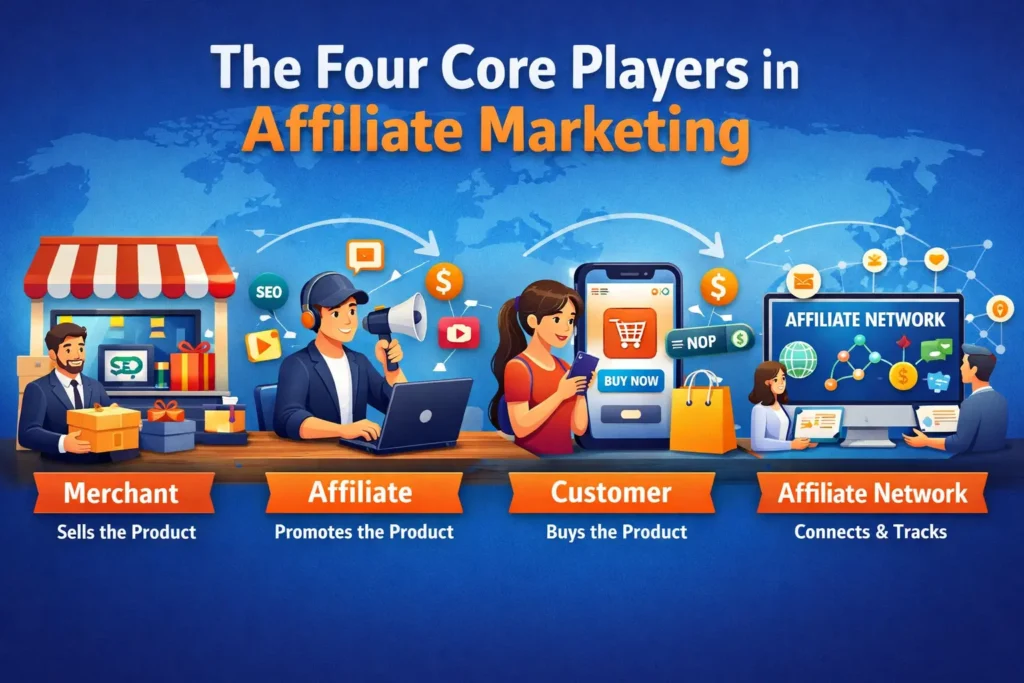
Affiliate marketing works through four essential participants:
Merchant
The merchant is the company or brand selling the product or service.
Example: A software company selling SEO tools.
Affiliate
The affiliate is the promoter who recommends the product to potential buyers.
Example: A blogger writing product reviews.
Customer
The customer is the person who clicks the referral link and makes a purchase.
Affiliate Network
An affiliate network acts as the middle platform connecting merchants with affiliates and managing tracking, reporting, and payments.
Examples include:
- ShareASale
- CJ Affiliate
- ClickBank
- Rakuten Advertising
Think of it as digital recommendation marketing—but scalable worldwide.
According to leading affiliate industry reports, referral-based ecommerce continues to grow annually as more buyers rely on trusted recommendations before purchasing online.
Why Most Beginners Fail
Many newcomers assume affiliate income happens quickly. In reality, most fail because they skip the fundamentals.
Common Beginner Mistakes
Choosing the Wrong Niche
Broad or low-demand markets make it difficult to attract qualified buyers.
Promoting Random Products
Unrelated recommendations weaken audience trust.
Ignoring Trust Building
People rarely buy from sources they do not trust.
Neglecting SEO
Without search visibility, even excellent content stays hidden.
Experienced marketers consistently find that audience trust matters more than aggressive promotion.
Choose a Profitable Niche
Your niche determines:
- Traffic quality
- Audience relevance
- Earning potential
High-Demand Niches in 2026
- Personal finance
- Health and wellness
- Technology tools
- Online education
- Productivity software
How to Choose Smartly
The ideal niche sits where:
- Consumer demand is strong
- Products are abundant
- You can provide real insights
For example, someone passionate about gadgets can naturally create stronger tech recommendations than someone chasing trends blindly.
Join High-Paying Affiliate Programs
Not every affiliate program deserves your effort.
What to Evaluate Before Joining
- Commission percentage
- Cookie duration
- Brand reputation
- Product quality
- Payment consistency
Recurring vs One-Time Commissions
Recurring commissions create predictable long-term revenue.
Example:
A software subscription paying monthly commissions can continue generating income for years from one customer.
Trusted Networks Worth Exploring
- ShareASale
- CJ Affiliate
- PartnerStack
- ClickBank
- Impact Radius
Always recommend products you would confidently use yourself.
Build a Trustworthy Platform
Trust is the real currency behind conversions.
Without credibility, traffic rarely converts into sales.
Start a Blog or Website
A website gives you:
- Full ownership
- Better branding control
- Long-term SEO growth
Unlike social media accounts, your website remains your permanent business asset.
Use Social Media Strategically
Different platforms serve different buyer journeys:
- YouTube builds product trust through demonstrations
- Instagram drives visual discovery
- LinkedIn supports professional recommendations
- Pinterest delivers evergreen search traffic
Master one platform before expanding.
Build an Email List Early
Email marketing remains one of the highest-converting channels.
Benefits include:
- Direct communication
- Repeat exposure
- Stronger trust relationships
Even small subscriber lists can outperform large cold audiences.
Create Content That Converts
People do not buy affiliate links—they buy confidence.
Your content should educate first and recommend second.
Write Honest Product Reviews
Balanced reviews convert better than exaggerated praise.
Include:
- Pros and cons
- Who the product is best for
- Honest limitations
Transparency builds trust.
Publish Comparison Articles
Comparison content captures buyers near purchase decisions.
Examples:
- Bluehost vs Hostinger
- SEMrush vs Ahrefs
These readers already have buying intent.
Create Tutorials and How-To Guides
Tutorials demonstrate practical value.
Example:
Instead of simply recommending email software, show how to create a successful campaign with it.
Solve Real Problems
High-converting content often answers specific needs:
- Best laptops for students under budget
- Top CRM tools for startups
- Affordable accounting apps for freelancers
Problem-solving content naturally drives conversions.
Mini Real-World Example
A beginner blogger in the web hosting niche may publish a detailed “Bluehost vs Hostinger” comparison article targeting long-tail search queries. Once ranked on Google, even one well-optimized article can generate recurring monthly commissions from highly targeted visitors.
This is how many successful affiliate sites begin.
Use SEO to Drive Free Organic Traffic
Organic traffic is one of the most valuable long-term growth assets.
Unlike paid ads, SEO brings visitors continuously without daily ad spending.
Smart Keyword Research
Focus on buyer-intent long-tail keywords.
Example:
Instead of targeting:
“Fitness equipment”
Target: “Best treadmill for small apartments”
Long-tail searches convert better because intent is clearer.
On-Page SEO Essentials
Optimize:
- Titles
- Headings
- URLs
- Meta descriptions
- Alt text
Google increasingly rewards content that improves user experience.
Internal Linking Matters
Link related articles together.
Example:
A product review should connect to tutorials, comparison guides, and buying tips.
This strengthens rankings and keeps readers engaged longer.
Promote Affiliate Links Strategically
Placement directly affects click-through rates.
Best Link Placement Areas
- Within product reviews
- Comparison tables
- CTA buttons
- End-of-article recommendations
Avoid Link Overstuffing
Too many referral links damage credibility.
Natural placement converts better than excessive promotion.
Use Strong Calls-to-Action
Instead of:
“Click here”
Use:
- Compare Pricing Now
- Start Free Trial Today
- Check Latest Offer
Specific CTAs outperform vague wording.
Track Results and Optimize Constantly
Top marketers improve performance through data.
Track These Metrics
- Click-through rates
- Conversion rates
- Bounce rates
- Revenue per page
Useful Tools
- Google Analytics
- Google Search Console
- Pretty Links
- ClickMagick
Sometimes a single headline change doubles conversions.
Top Affiliate Marketing Success Factors in 2026
| Strategy Area | Why It Matters | Best Practice |
| Niche Selection | Determines profitability and audience demand | Choose evergreen, high-demand niches |
| Affiliate Programs | Impacts earning potential | Focus on trusted recurring commission programs |
| Content Creation | Drives trust and conversions | Publish reviews, comparisons, tutorials |
| SEO Optimization | Brings free long-term traffic | Target long-tail buyer intent keywords |
| Email Marketing | Improves repeat conversions | Build subscriber list early |
| Link Placement | Affects click-through rate | Insert naturally within valuable content |
| Analytics Tracking | Helps improve performance | Monitor CTR, conversions, bounce rates |
| Mobile Optimization | Critical for user experience | Ensure responsive fast-loading pages |
| Trust Building | Increases buyer confidence | Promote only tested quality products |
| Consistency | Drives long-term success | Publish regularly and optimize often |
Common Mistakes to Avoid in Affiliate Marketing
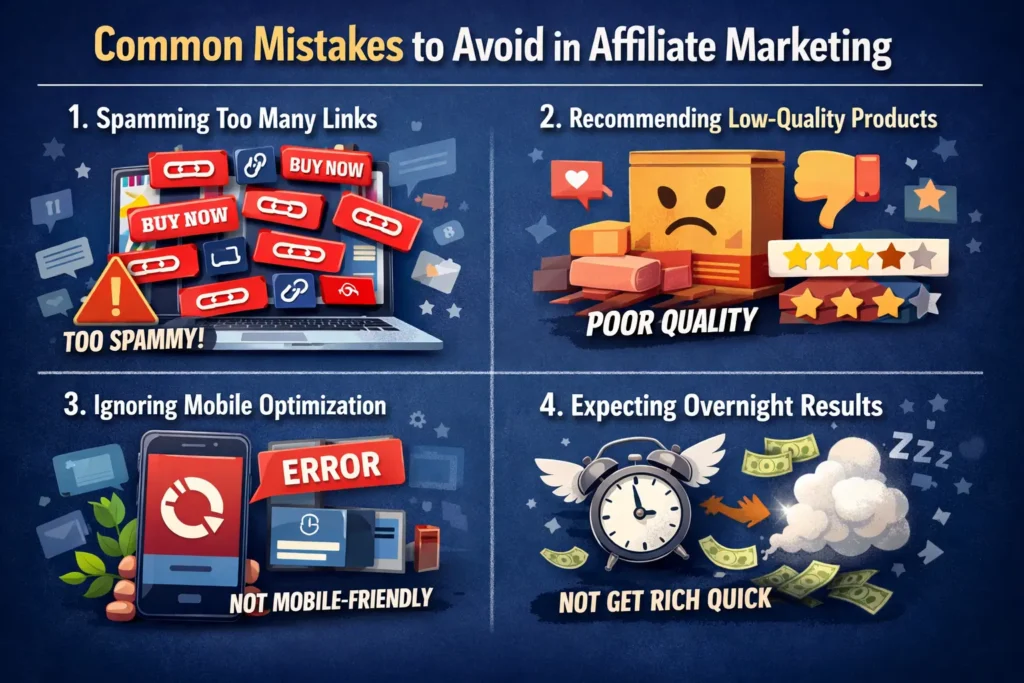
Many beginners enter affiliate marketing expecting fast results, but small mistakes can quickly slow growth and reduce earning potential. Avoiding these common errors is essential if you want to build long-term trust, increase conversions, and create a sustainable online income stream.
1. Spamming Too Many Affiliate Links
One of the biggest mistakes beginners make is placing affiliate links everywhere without offering useful information or context.
If your content feels overly promotional, readers may lose trust and leave your website without clicking anything. Instead of flooding articles with links, focus on adding them naturally within helpful, informative content.
For example, a detailed product review with honest insights performs far better than a page filled only with referral links.
Best Practice: Always prioritize value first, promotion second.
2. Recommending Low-Quality Products
Promoting poor-quality or irrelevant products can damage your reputation quickly.
Even if a product offers high commissions, recommending something unreliable may lead to disappointed buyers, refund requests, and loss of audience trust. In affiliate marketing, credibility is your most valuable asset.
Before promoting any product:
- Test it yourself if possible
- Read customer reviews
- Verify brand reputation
Trustworthy recommendations create loyal audiences and repeat conversions.
3. Ignoring Mobile Optimization
Today, most online users browse websites through smartphones rather than desktops.
If your website loads slowly, has poor mobile design, or difficult navigation, visitors may leave before clicking your affiliate links. A bad mobile experience directly affects:
- Bounce rate
- Search rankings
- Conversion rates
Make sure your website is:
- Mobile responsive
- Fast loading
- Easy to navigate on smaller screens
A mobile-friendly website improves both SEO and user satisfaction.
4. Expecting Overnight Results
Many people quit too early because they expect instant commissions.
Affiliate marketing is not a get-rich-quick scheme—it is a long-term digital business model that requires patience, consistency, and strategic effort. Building organic traffic, audience trust, and ranking content on search engines takes time.
Successful affiliate marketers often spend months creating valuable content before seeing steady income.
Remember: Long-term consistency beats short-term shortcuts every time.
Patience often separates winners from quitters.
Advanced Growth Strategies
Once your foundation works, scaling becomes easier.
Use Paid Ads Carefully
Paid campaigns work best after proving organic conversions first.
Retarget Past Visitors
Most buyers need multiple touchpoints before purchasing.
Retargeting increases second-chance conversions.
Collaborate with Influencers
Strategic partnerships expand reach quickly.
Offer Bonus Incentives
Example:
“Buy through my link and receive free bonus templates.”
Bonuses increase urgency and trust.
Best Tools for Affiliate Success
SEO Tools
- Ahrefs
- SEMrush
- Ubersuggest
Email Platforms
- ConvertKit
- Mailchimp
- GetResponse
Link Tracking Tools
- Pretty Links
- ClickMagick
Landing Page Builders
- Elementor
- Leadpages
- Unbounce
The right tools save time and improve profitability.
Future Trends in Affiliate Marketing (2026 and Beyond)
This industry continues evolving rapidly.
AI Personalization
AI helps match offers based on buyer behavior patterns.
Voice Search Growth
Smart assistant searches are increasing every year.
Video Commerce Expansion
Short-form video now drives major buying decisions.
Marketers who adapt early gain competitive advantages.
Conclusion
Affiliate marketing remains one of the most scalable online income models in 2026—but only for those willing to build trust and think long term.
Start small:
Choose one niche.
Create valuable content.
Help people solve problems.
The most successful affiliate marketers are not chasing shortcuts—they are building trust through consistency.
The sooner you begin, the sooner your content starts working for you—even while you sleep.
Frequently Asked Questions (FAQs)
1. How long does it take to earn your first commission?
Most beginners earn their first commission within 3–6 months when they consistently publish optimized, helpful content and target buyer-intent keywords.
2. Can beginners start without investment?
Yes, but investing in a domain, hosting, and essential tools significantly improves professionalism and long-term growth potential.
3. What is the best niche for beginners?
Health, finance, education, and software remain strong beginner-friendly niches because they combine high demand with strong commission opportunities.
4. Is a website necessary?
A website is not mandatory, but it is highly recommended because it gives you ownership, SEO benefits, and stronger long-term authority.
5. How much can someone realistically earn?
Earnings vary widely. Some beginners make their first $50 within weeks, while experienced marketers build full-time recurring income streams over time.