What if your money could keep earning—even while you sleep?
That simple idea is why passive income has become one of the most searched financial topics. As inflation rises, job markets shift, and digital tools become more accessible, millions of beginners are searching for smarter ways to earn money online without depending entirely on one paycheck.
Unlike traditional income, passive income helps you build long-term financial assets that generate recurring revenue over time. Whether you are a student looking for extra earnings, a working professional seeking financial freedom, or someone wanting to make money from home, building multiple income streams can create stability and independence.
The best part? Many beginner online business ideas now require little to no investment. With consistency, patience, and the right strategy, anyone can start building sustainable digital income streams.
In this guide, you will learn:
- What passive income really means
- 25 beginner-friendly income ideas
- Real earning expectations
- Common mistakes to avoid
- Expert-backed tips for faster success
What Is Passive Income?
Passive income is money earned from assets, systems, or businesses that continue generating revenue after the initial work is completed.
For example:
- A blog earns ad revenue after publishing articles
- A digital product keeps selling repeatedly
- Dividend stocks pay income regularly
Active Income vs Passive Income
| Income Type | Description | Example |
| Active Income | Requires constant work for each payment | Salary, freelancing |
| Passive Income | Initial effort creates long-term recurring earnings | Blog revenue, stock dividends |
Common Myths Beginners Believe
Myth 1: Passive income requires no work
Reality: Every income stream needs upfront effort.
Myth 2: It creates instant wealth
Reality: Most streams take months before profits appear.
Myth 3: Only wealthy people can start
Reality: Many methods begin with zero or very low capital.
As Investopedia frequently highlights, long-term passive wealth is built through consistency—not shortcuts.
Also know more about
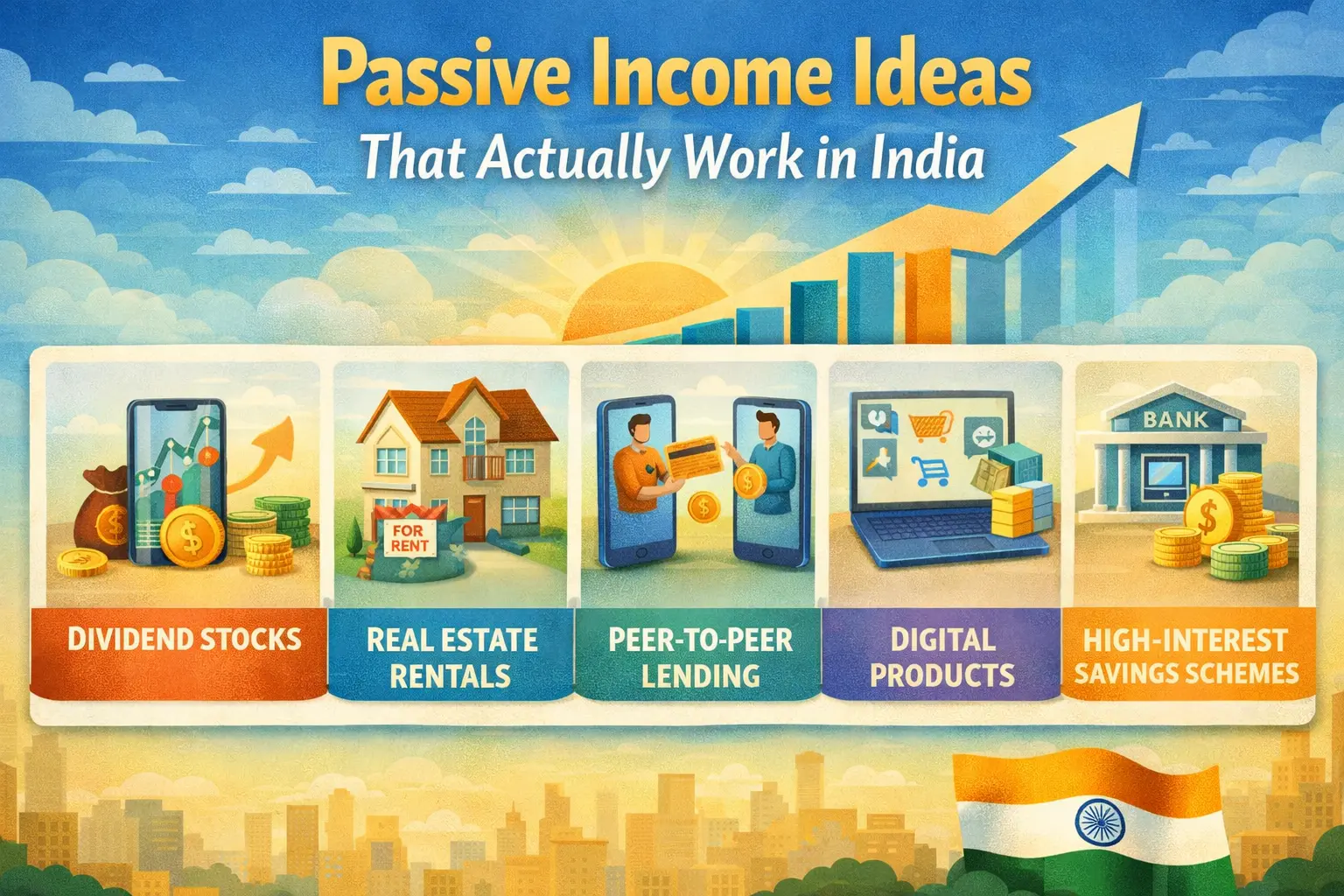
10 Passive Income Ideas That Actually Work in India
Why Beginners Should Start Building Passive Income
The financial world has changed dramatically.
Relying on one salary alone is increasingly risky.
Reasons to Start Now:
- Inflation keeps increasing living costs
- Remote digital work continues expanding
- AI tools simplify online business creation
- More platforms support beginner creators than ever before
Shopify reports that digital product entrepreneurship continues growing rapidly, especially among first-time online sellers.
Starting early gives your recurring online income more time to compound and scale.
Things to Consider Before Starting
Before choosing your income stream, evaluate:
1. Time Investment
Some methods need heavy upfront effort.
2. Startup Capital
Investment-based models may require funding.
3. Skill Requirements
Writing, design, marketing, or technical skills may help.
4. Risk Level
Not every passive model carries equal risk.
Here’s where most beginners go wrong: they choose trendy ideas without matching them to their own skills.
Pick a model that fits your strengths.
25 Best Passive Income Ideas for Beginners
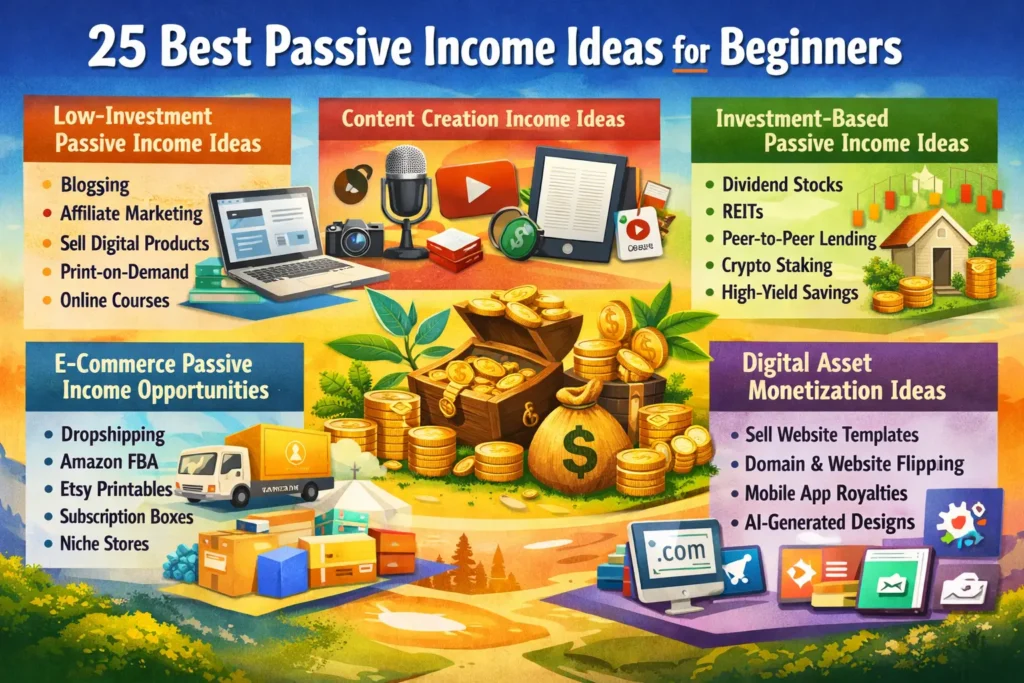
Low-Investment Passive Income Ideas
1. Start a Blog
Starting a blog means creating a website focused on a specific topic or niche, such as food, fitness, travel, finance, or technology. Instead of writing about everything, successful blogs usually focus on one clear subject to attract a targeted audience.
Once your blog starts getting visitors, it can earn income in several ways:
- Ads: Platforms like Google AdSense pay you when visitors see or click ads on your blog.
- Affiliate Commissions: You recommend products and earn a percentage when readers buy through your special links.
- Sponsored Content: Brands may pay you to write reviews or mention their products.
Example:
A beginner food blogger writes articles reviewing kitchen tools like blenders and air fryers. If readers click affiliate links and buy those products, the blogger earns commissions each month.
Why It Works:
A blog becomes a long-term digital asset. One article can continue bringing traffic and earnings for years.
2. Affiliate Marketing
Affiliate marketing is one of the easiest ways to earn money online without creating your own product.
In this model:
- You promote other companies’ products.
- When someone buys using your referral link, you earn a commission.
Popular Affiliate Platforms:
- Amazon Associates
- ShareASale
- Impact
Example:
If you run a fitness blog and recommend protein powders, every purchase made through your affiliate link earns you a commission.
Why It’s Great for Beginners:
- No product creation needed
- No inventory management
- Very low startup cost
This is why affiliate marketing remains one of the best low-budget passive income methods.
3. Sell Digital Products
Digital products are downloadable items customers buy online. Once created, they can be sold repeatedly without extra production cost.
Examples include:
- eBooks
- Templates
- Printable planners
- Resume designs
- Worksheets
Example:
A student creates Canva resume templates and sells them on Etsy. One template can be sold hundreds of times with almost no ongoing effort.
Why It Works:
You create once, then earn repeatedly from the same product.
Benefits:
- No shipping required
- High profit margins
- Scalable business model
4. Print-on-Demand Store
Print-on-demand (POD) allows you to sell customized products without keeping stock.
You design items like:
- T-shirts
- Mugs
- Tote bags
- Hoodies
- Phone cases
When a customer places an order:
- The POD supplier prints the design.
- They package it.
- They ship directly to the customer.
Example Platforms:
- Printful
- Printify
- Redbubble
Why It’s Beginner-Friendly:
- No inventory investment
- No warehouse needed
- Easy to start with creative designs
This is ideal for people who enjoy design but want low-risk online income.
5. Create an Online Course
An online course lets you teach skills once and sell access repeatedly.
If you know something valuable, you can turn it into video lessons, PDFs, or tutorials.
Popular topics:
- Graphic design
- Photography
- Excel skills
- Language learning
- Social media marketing
Platforms:
- Udemy
- Teachable
- Skillshare
Example:
A graphic designer records a Photoshop basics course and uploads it to Udemy. Every time a student enrolls, they earn money.
Why It Works:
Courses can generate recurring income for years after creation.
Best Part:
You are monetizing knowledge you already have.
Content Creation Income Ideas
6. YouTube Automation Channels
YouTube automation channels are faceless YouTube channels where content is created without the owner appearing on camera. Instead of recording yourself, you outsource or automate tasks like scriptwriting, voiceovers, video editing, and thumbnail design.
How it works:
- Choose a niche (finance, tech, motivation, facts, etc.)
- Create videos using stock footage, AI voiceovers, or freelancers
- Upload consistently to grow subscribers
- Earn money from YouTube ads, sponsorships, and affiliate links
Example:
A channel posting “Top 10 Business Facts” videos can generate passive ad revenue once monetized.
Why it’s passive:
After videos are uploaded, they can continue earning views and revenue for months or years.
7. Monetized Podcasting
Podcasting means creating audio content around a topic people enjoy listening to, such as business advice, storytelling, interviews, or education.
Once your podcast gains listeners, you can monetize it in several ways:
Income sources:
- Sponsorships: Brands pay to advertise on your episodes
- Memberships: Loyal listeners pay monthly for exclusive content
- Paid subscriptions: Premium episodes behind paywalls
Example:
A marketing podcast with 5,000 regular listeners can earn sponsorship income from brands targeting that audience.
Why it’s passive:
Older podcast episodes can continue attracting downloads and generating revenue over time.
8. Publish eBooks on Amazon Kindle
Amazon Kindle Direct Publishing (KDP) allows anyone to self-publish books online and earn royalties every time someone buys them.
What you can publish:
- Educational guides
- Fiction stories
- How-to books
- Journals or planners
Example:
A beginner writes an eBook called “Beginner’s Guide to Freelancing” and earns royalties every month from Amazon sales.
Why it’s passive:
Once published, Amazon handles sales, delivery, and payments automatically.
9. Stock Photography Sales
If you take high-quality photos, you can upload them to stock image websites where businesses, bloggers, and marketers buy licenses to use them.
Popular platforms:
- Shutterstock
- Adobe Stock
- iStock
Example:
Photos of office desks, travel destinations, food, or business meetings sell well.
How earnings work:
Each time someone downloads your image, you earn a royalty commission.
Why it’s passive:
One uploaded photo can keep generating income repeatedly for years.
10. License Music or Audio Clips
Musicians, producers, and sound designers can earn money by licensing original audio content online.
Types of audio sold:
- Beats
- Background music
- Loops
- Sound effects
Popular platforms:
- AudioJungle
- Pond5
- Epidemic Sound
Example:
A creator makes relaxing piano background music and licenses it for YouTube creators and filmmakers.
Why it’s passive:
One audio file can be sold multiple times to different buyers without recreating it.
Investment-Based Passive Income Ideas
11. Dividend Stocks
Dividend stocks are shares of companies that regularly distribute part of their profits to shareholders.
How It Works:
When you buy stock in dividend-paying companies, you may receive quarterly or annual cash payments called dividends.
Example:
If you own shares in a company like Coca-Cola, the company may pay you dividends every few months.
Why Beginners Like It:
- Generates regular income
- Good for long-term wealth building
- Can grow over time if reinvested
Risk:
Stock prices can rise or fall.
12. REIT Investments
REIT stands for Real Estate Investment Trust.
These companies own income-generating properties like:
- Shopping malls
- Office buildings
- Apartments
How It Works:
Instead of buying real estate yourself, you invest in a REIT and earn a share of rental profits.
Example:
Buying shares in a REIT is similar to owning a small part of many buildings without managing tenants.
Benefits:
- No need to buy physical property
- Lower investment cost
- Regular dividend payouts
Risk:
Property markets can fluctuate.
13. Peer-to-Peer Lending (P2P Lending)
This means lending your money to individuals or small businesses through online platforms.
How It Works:
You act like a mini-bank:
- You lend money digitally
- Borrowers repay with interest
- You earn profit from interest payments
Example:
If you lend ₹10,000 at 10% annual interest, you may earn ₹1,000 yearly.
Benefits:
- Higher returns than savings accounts
- Automated platforms make it easy
Risk:
Borrowers may fail to repay.
14. Crypto Staking
Crypto staking means locking cryptocurrency in a blockchain network to earn rewards.
How It Works:
You hold supported crypto coins in a staking wallet, and the network pays rewards for helping secure transactions.
Example:
If you stake Ethereum, you may earn annual percentage rewards.
Benefits:
- Passive crypto rewards
- No daily effort needed
Risk:
Crypto prices are highly volatile.
15. High-Yield Savings Accounts
These are bank savings accounts that offer higher interest than regular savings accounts.
How It Works:
You deposit money, and the bank pays higher annual interest.
Example:
A normal savings account may give 2–3%, while high-yield accounts may offer more depending on bank rates.
Benefits:
- Very low risk
- Safe for beginners
- Easy access to money
Risk:
Lower returns compared to stocks or crypto.
Quick Comparison Table
| Option | Risk Level | Returns Potential | Best For |
| Dividend Stocks | Medium | Medium-High | Long-term investors |
| REITs | Medium | Medium | Real estate exposure |
| P2P Lending | Medium-High | High | Higher interest seekers |
| Crypto Staking | High | High | Crypto investors |
| High-Yield Savings | Low | Low | Safe beginners |
E-Commerce Passive Income Opportunities
16. Dropshipping Automation
Dropshipping automation is an e-commerce business model where you sell products online without storing or shipping inventory yourself. Instead, when a customer places an order on your website, a third-party supplier ships the product directly to them.
How it works:
- Create an online store (Shopify, WooCommerce, etc.)
- List products from suppliers like AliExpress or CJ Dropshipping
- Customer buys from your store
- Supplier ships product directly to customer
Why it is considered passive:
Automation tools can manage:
- Order processing
- Inventory syncing
- Price updates
- Tracking notifications
Example:
You run a pet accessories store. A customer orders a dog leash, and your supplier automatically fulfills it.
Benefits:
- No warehouse needed
- Low startup cost
- Easy to scale
Challenges:
- Lower profit margins
- Supplier delays can affect customer experience
17. Amazon FBA Private Label
Amazon FBA (Fulfillment by Amazon) Private Label means creating your own branded product and selling it on Amazon while Amazon handles storage, packing, shipping, and customer service.
How it works:
- Find a product with demand
- Source it from manufacturers
- Add your branding/logo
- Send inventory to Amazon warehouses
- Amazon fulfills orders automatically
Example:
You create your own branded water bottle called “HydroPure” and sell it through Amazon.
Why it works well:
- Amazon handles logistics
- Access to millions of customers
- Builds long-term brand value
Benefits:
- Scalable business model
- Strong trust via Amazon platform
- Higher branding control
Challenges:
- Requires upfront investment
- Product research is critical
18. Etsy Printable Products
Etsy printable products are digital files customers buy, download, and print themselves. These require no shipping and can sell repeatedly after one creation.
Popular printable categories:
- Wedding invitations
- Budget planners
- Wall art
- To-do lists
- Resume templates
Example:
A designer creates a wedding invitation template once and sells it hundreds of times.
Why it is passive:
After uploading the file, Etsy automates:
- Sales processing
- File delivery
- Customer downloads
Benefits:
- No inventory needed
- High profit margins
- Low maintenance
Challenges:
- Requires design creativity
- Competitive market
19. Subscription Box Business
A subscription box business delivers curated products to customers monthly on a recurring subscription basis.
How it works:
Customers subscribe and receive themed boxes every month.
Examples:
- Beauty product boxes
- Snack boxes
- Fitness gear boxes
- Book subscription boxes
Why it creates recurring income:
Monthly subscriptions generate predictable recurring revenue.
Example:
A skincare box charging $25/month with 200 subscribers earns $5,000 monthly recurring revenue.
Benefits:
- Stable recurring income
- Loyal customer base
- Strong brand retention
Challenges:
- Inventory management needed
- Packaging and shipping complexity
20. Niche Marketplace Stores
Niche marketplace stores focus on highly specific product categories aimed at a targeted audience.
Instead of selling everything, they specialize deeply in one niche.
Examples:
- Eco-friendly kitchen tools
- Yoga accessories
- Gaming desk setups
- Organic baby products
Why niche works:
Specialized stores attract focused buyers with strong purchase intent.
Example:
Instead of a general home store, you create a store selling only ergonomic office desk accessories.
Benefits:
- Easier branding
- Less competition than broad markets
- Higher customer loyalty
Challenges:
- Requires niche research
- Smaller audience size if niche too narrow
Digital Asset Monetization Ideas
21. Sell Website Templates
Selling website templates means creating ready-made website designs that people can buy and use for their own websites. Many businesses and individuals want professional-looking websites without hiring expensive designers, so they purchase pre-designed templates.
How it works:
You design templates for platforms like:
- WordPress – Blog and business websites
- Shopify – Online eCommerce stores
- Wix – Drag-and-drop websites for beginners
Example:
If you create a stylish restaurant website template, hundreds of restaurant owners can buy and use it.
Where to sell:
- ThemeForest
- TemplateMonster
- Creative Market
Why it’s passive:
Once uploaded, the same template can be sold repeatedly without redesigning it each time.
22. Mobile App Royalties
Mobile app royalties are earnings you receive from apps after publishing them on app stores like Google Play or Apple App Store.
Apps generate income through:
- Ads: Earnings when users view ads inside the app
- Subscriptions: Monthly or yearly paid memberships
- In-app purchases: Users buy premium features/items
Example:
A meditation app may earn:
- Ad revenue from free users
- Subscription fees from premium members
Why it’s passive:
After app development, the app can continue earning automatically as long as users keep downloading and using it.
23. Domain Flipping
Domain flipping is buying domain names at low prices and selling them later for higher profits.
Example:
You buy:
besttravelgear.com for $10
Later sell it for:
$500 or more
How people profit:
Businesses often pay premium prices for:
- Short names
- Brandable names
- High-demand keywords
Tips:
Look for:
- Trending niches
- Expired valuable domains
- Memorable brand names
Why it’s passive:
Once purchased, domains may increase in value over time with little maintenance.
24. Website Flipping
Website flipping means building or buying websites, increasing their traffic and revenue, then selling them at a higher price.
Example:
You create a niche blog:
- Add SEO articles
- Grow monthly traffic
- Earn affiliate revenue
Then sell it for:
20–40 times monthly profit
Example sale:
A site earning $300/month may sell for $6,000–$12,000.
Popular selling platforms:
- Flippa
- Empire Flippers
- Motion Invest
Why it’s profitable:
Buyers pay for proven websites that already generate income.
25. Sell AI-Generated Design Assets
AI-generated design assets are digital graphics created using artificial intelligence tools and sold online.
Examples include:
- Icons
- Logos
- Social media templates
- Posters
- Background graphics
AI tools used:
- Midjourney
- Canva AI
- Adobe Firefly
- DALL·E
Example:
A creator designs 100 Instagram post templates using AI and sells them as downloadable packs.
Where to sell:
- Etsy
- Creative Market
- Gumroad
Why it’s growing fast:
Businesses need affordable, fast design solutions, and AI speeds up creation dramatically.
Why it’s passive:
Once uploaded, digital assets can sell repeatedly with no shipping or inventory needed.
Comparison Table: Best Passive Income Ideas for Beginners
| Income Method | Startup Cost | Time to First Earnings | Difficulty |
| Blogging | Low | 3–6 months | Medium |
| Affiliate Marketing | Low | 2–4 months | Easy |
| Digital Products | Low | 1–3 months | Easy |
| Dividend Stocks | Medium | 1–2 months | Easy |
| YouTube Automation | Medium | 3–6 months | Medium |
| Dropshipping | Medium | 1–3 months | Medium |
| Online Courses | Low | 2–5 months | Medium |
| Print-on-Demand | Low | 1–2 months | Easy |
Best Passive Income Ideas for Complete Beginners
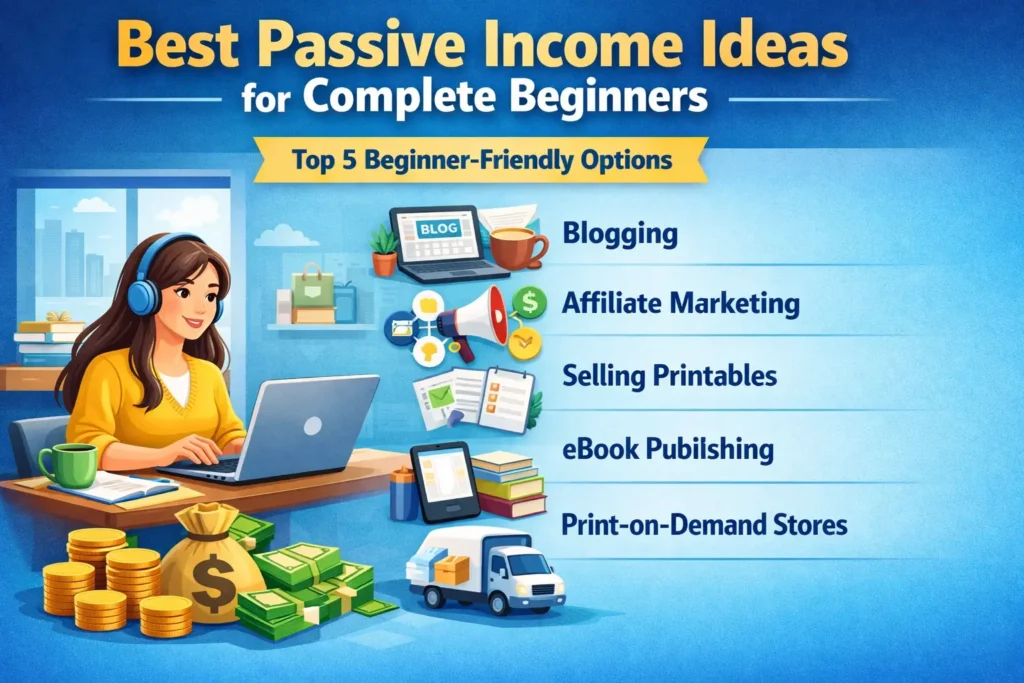
If starting from zero, begin with:
Top 5 Beginner-Friendly Options:
- Blogging
- Affiliate marketing
- Selling printables
- eBook publishing
- Print-on-demand stores
Why these work best:
- Low startup cost
- Minimal technical skills needed
- Easy scalability
How Much Can Beginners Earn?
Income depends on effort, niche, and consistency.
Realistic Monthly Beginner Earnings
| Method | Monthly Range |
| Blogging | $50–$2,000+ |
| Affiliate Marketing | $100–$5,000+ |
| Printables | $50–$1,500+ |
| YouTube Ads | $100–$10,000+ |
| Dividend Stocks | Based on investment size |
Most people begin seeing stable results within 3–12 months.
Common Mistakes Beginners Make
1. Expecting Instant Results
Real growth takes time.
2. Starting Too Many Streams at Once
Focus beats scattered effort.
3. Ignoring Consistency
Regular updates build long-term assets.
4. Falling for Scams
Avoid fake “guaranteed income” promises.
5. Quitting Too Early
Many people stop before momentum starts.
Expert Insight
“The most successful passive income earners focus on building assets first, not chasing quick profits.”
That said, not every model fits everyone. Choose based on your skills—not hype.
Expert Tips to Succeed Faster
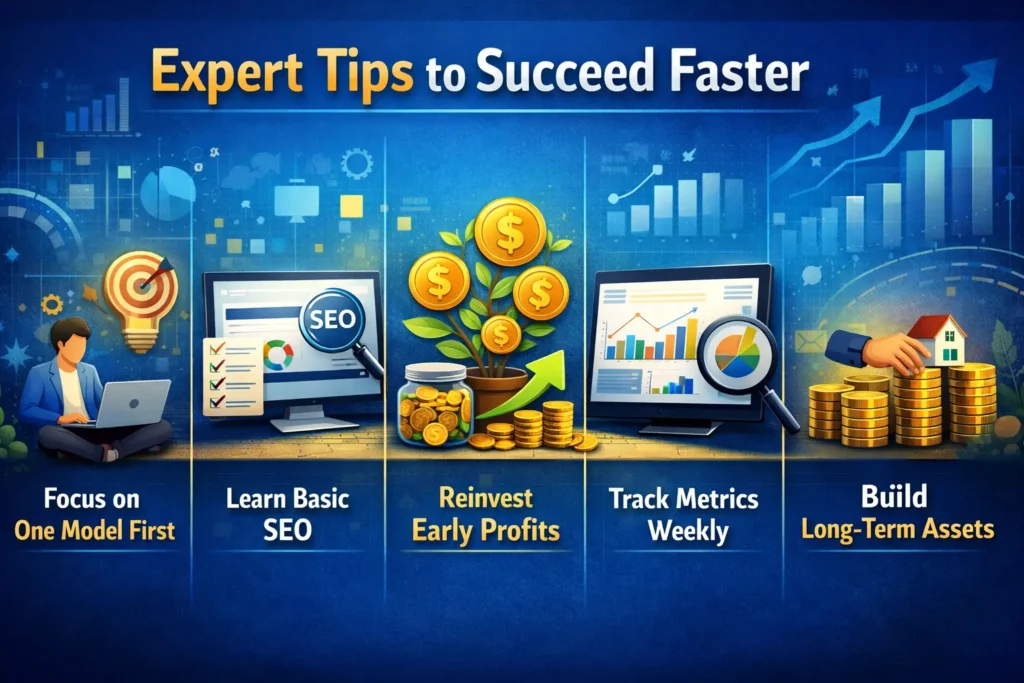
Focus on One Model First
Master one before diversifying.
Learn Basic SEO
Search traffic creates free long-term visitors.
Reinvest Early Profits
Scale faster using earned revenue.
Track Metrics Weekly
Monitor:
- Traffic
- Revenue
- Conversion rates
Build Long-Term Assets
Think sustainability, not shortcuts.
Real Example: How Beginners Often Start
A teacher launches an online grammar course:
- Month 1: Creates lessons
- Month 2: Uploads course online
- Month 4: Makes first sales
- Month 10: Reaches $700 monthly recurring income
This is how real passive systems grow—slowly, then steadily.
Beginner Action Plan: Your First 30 Days
| Week | Action Step |
| Week 1 | Choose one passive income model |
| Week 2 | Research tools and create setup plan |
| Week 3 | Launch your first asset |
| Week 4 | Analyze first results and optimize |
Why Passive Income Builds Financial Freedom
Passive income creates:
- Extra monthly cash flow
- Reduced money stress
- More schedule freedom
- Long-term wealth growth
Even one successful stream can eventually replace part of your salary.
Conclusion
Every successful passive income journey begins with one decision: starting before you feel ready.
You do not need advanced skills, big money, or perfect timing.
Pick one method today. Stay consistent for 90 days. Build assets that can transform your financial future and help you earn money online with lasting stability.
The sooner you begin, the sooner your income starts working for you.
Frequently Asked Questions (FAQs)
1. What is the easiest passive income idea for beginners?
Affiliate marketing, blogging, and digital product sales remain the easiest because they require low investment and simple startup steps.
2. Can I start passive income with no money?
Yes. Blogging, YouTube, and affiliate marketing can begin with almost zero upfront cost.
3. How long does it take to earn money online?
Most beginners see early results within 3–6 months, depending on consistency and niche demand.
4. Which passive income stream is most profitable?
Online courses, affiliate marketing, and AI digital products offer strong long-term earning potential.
5. Is passive income really passive?
Not completely. Most models require initial work and occasional updates to remain profitable.