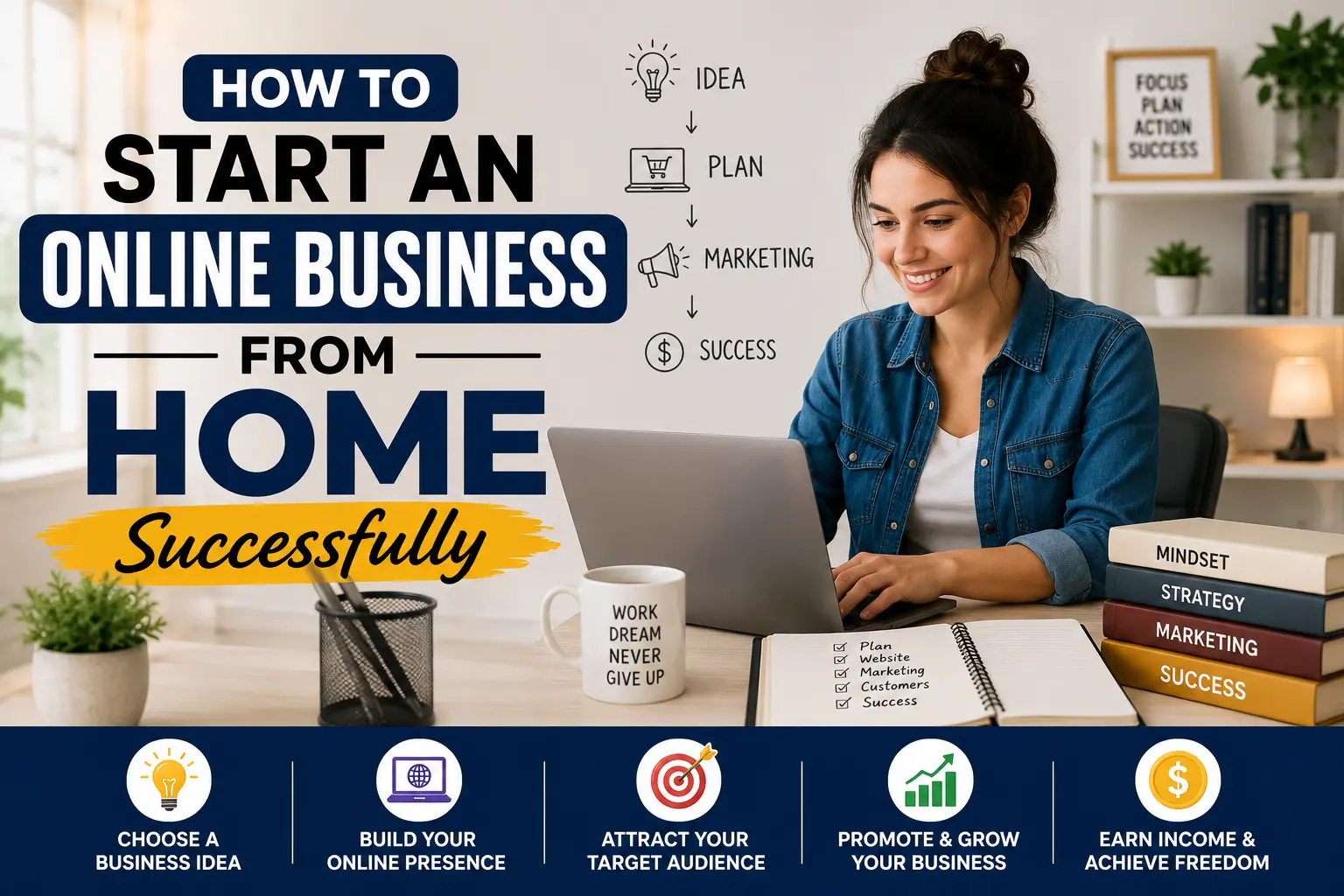
A few years ago, most people believed starting a business meant renting an office, hiring staff, investing large amounts of money, and taking huge financial risks. That idea has changed completely. Today, people are building profitable businesses directly from their bedrooms, small apartments, and even kitchen tables.
The rise of digital platforms has opened opportunities for students, freelancers, stay-at-home parents, and working professionals who want additional income or financial independence. In fact, one of the biggest reasons people search for topics like How to make money online is because online businesses now offer flexibility that traditional jobs often cannot provide.
What makes this even more attractive is that many beginners can Earn money online without investment by starting with skills they already have. A laptop, internet connection, and consistency are often enough to begin.
However, there is one important thing many “quick money” videos never explain properly: building a successful online business still requires patience, learning, and trust. It is not instant success. Some people may earn their first income within weeks, while others may need several months before seeing consistent results.
This guide will walk you through practical and realistic ways to start an online business from home, avoid beginner mistakes, and build something sustainable long term.
What Is an Online Business?
An online business is any business that operates mainly through the internet. Instead of depending on a physical location, businesses use websites, digital platforms, social media, and online marketplaces to sell products or services.
You probably interact with online businesses every day without realizing it. Ordering products from an online store, watching monetized YouTube videos, purchasing a digital course, or hiring a freelancer are all examples of digital business models.
One reason online businesses continue growing rapidly is convenience. Customers prefer fast access, simple purchasing processes, and online support instead of visiting physical stores.
The best part is that there are many ways to start depending on your skills and interests.
Popular Online Business Ideas
Online Business Models Comparison Table
| Business Model | Startup Cost | Skill Level | Time to Earn | Long-Term Potential |
| Freelancing | Very Low | Medium | Fast | High |
| Blogging | Low | Medium | Slow | Very High |
| Affiliate Marketing | Low | Medium | Medium | High |
| E-commerce Store | Medium | Medium | Medium | High |
| Online Coaching | Low | High | Fast | High |
| Print-on-Demand | Low | Beginner-Friendly | Medium | Medium |
1. Freelancing Services
Freelancing is one of the easiest ways to start because you can use skills you already have.
Popular freelance services include:
- Content writing
- Graphic design
- Video editing
- Social media management
- Web development
- SEO services
Many beginners start on platforms like Fiverr or Upwork with simple projects before moving toward high-paying clients.
One common mistake freelancers make early on is charging extremely low prices just to get clients quickly. While competitive pricing helps initially, underpricing your work for too long can make growth difficult later.
2. Blogging and Content Creation
Blogging remains one of the most reliable long-term business models when done correctly.
A blog can generate revenue through:
- Advertisements
- Affiliate marketing
- Sponsored content
- Digital products
- Email marketing
The important thing to understand is that blogging usually takes time. Many successful websites do not see major traffic during the first few months. Consistency matters far more than overnight results.
3. Affiliate Marketing
Affiliate marketing allows creators to recommend products or services and earn commissions from purchases made through referral links.
This model works especially well for:
- Product reviews
- Tutorials
- YouTube videos
- Niche blogs
The biggest advantage is that you do not need to create your own product.
4. E-commerce Stores
E-commerce businesses sell physical or digital products online.
Popular categories include:
- Fashion
- Beauty products
- Home decor
- Fitness accessories
- Gadgets
Some store owners manage inventory themselves, while others use dropshipping or print-on-demand services.
5. Online Coaching and Consulting
People are willing to pay for knowledge and guidance that helps solve problems faster.
If you have expertise in:
- Fitness
- Business
- Marketing
- Language learning
- Career growth
- Finance
you can offer coaching sessions or consulting services online.
Why Starting an Online Business From Home Makes Sense
Lower Startup Costs
Traditional businesses often require:
- Rent
- Furniture
- Employees
- Utilities
- Large inventory
Online businesses usually remove most of these expenses.
Some people even start with free tools before upgrading gradually as revenue grows.
Flexible Work Schedule
One of the biggest reasons people prefer online businesses is flexibility.
You can:
- Work early mornings
- Build a side business after office hours
- Manage work around studies
- Operate while traveling
This flexibility is especially valuable for people balancing family responsibilities or full-time jobs.
Global Reach
A local shop depends on nearby customers. An online business can reach people across different cities and countries.
Even a small creator with useful content can attract a worldwide audience over time.
Long-Term Income Potential
Unlike one-time jobs, digital businesses can continue generating income through:
- Search engine traffic
- Digital products
- Affiliate links
- Automated systems
- Course sales
This is why many entrepreneurs focus on building digital assets instead of relying only on hourly work.
Challenges Beginners Should Expect
Starting online sounds exciting, but there are challenges most beginners underestimate.
Competition Is High
Almost every profitable niche already has competitors. That does not mean the market is impossible to enter. It simply means you need better positioning and consistency.
Many successful creators grow because they explain topics more clearly or connect better with audiences, not because they invented something completely new.
Motivation Drops Quickly
Working from home sounds comfortable until distractions appear.
Social media, entertainment, inconsistent routines, and lack of discipline stop many beginners before they see progress.
Creating a fixed schedule helps more than relying on motivation alone.
Building Trust Takes Time
People rarely buy from unknown brands immediately.
Trust usually develops through:
- Helpful content
- Positive reviews
- Professional branding
- Consistent communication
Businesses that focus only on selling without building credibility often struggle long term.
Step-by-Step Guide to Starting an Online Business
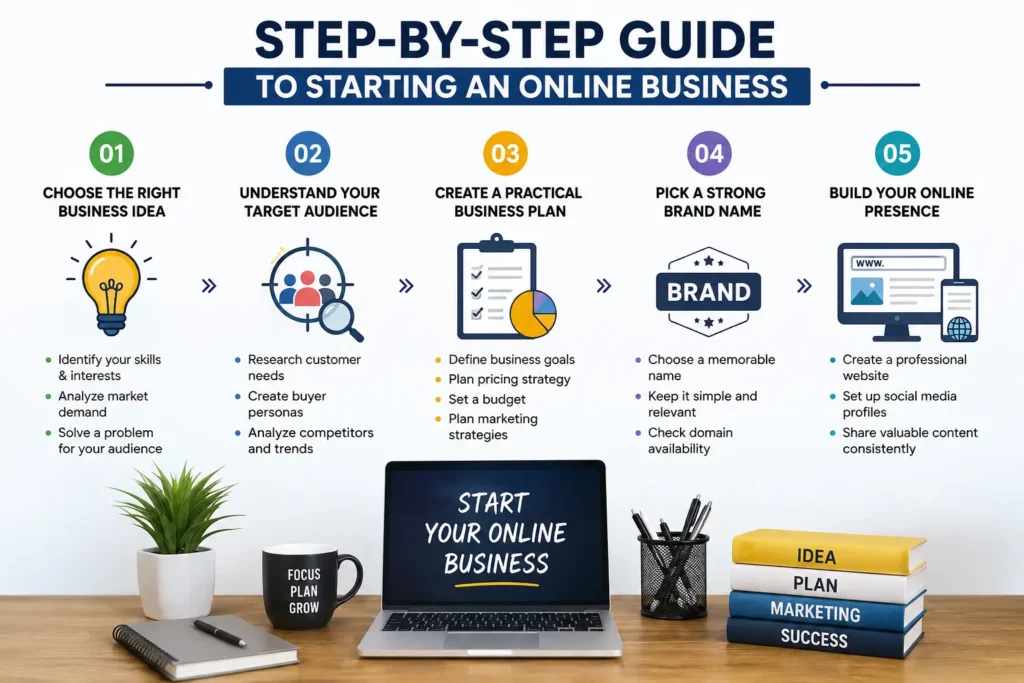
Step 1: Choose the Right Business Idea
Start with skills, interests, or knowledge you already have.
Ask yourself:
- What can I genuinely help people with?
- What topics do I enjoy learning about?
- What problems do people repeatedly ask me to solve?
A beginner who enjoys graphic design will likely stay consistent longer than someone randomly choosing a niche only because it looks profitable.
Research demand carefully before committing.
Useful places for research:
- Google Trends
- Reddit discussions
- YouTube comments
- Quora
- Facebook groups
You are looking for problems people actively want solved.
Step 2: Understand Your Target Audience
One major reason online businesses fail is poor audience understanding.
For example:
A beginner selling fitness plans to everyone usually struggles. Someone targeting busy office workers who want quick home workouts has clearer positioning.
Specific audiences convert better because the messaging feels more relevant.
Study:
- Customer pain points
- Competitor weaknesses
- Frequently asked questions
- Buying behavior
This helps create stronger offers and better marketing content.
Step 3: Create a Practical Business Plan
Your plan does not need complicated spreadsheets.
Focus on:
- Income goals
- Content strategy
- Target audience
- Budget
- Monthly tasks
Many beginners waste weeks creating “perfect plans” instead of starting.
Execution matters more than perfect planning.
Step 4: Pick a Strong Brand Name
A memorable business name helps people recognize your brand faster.
Good business names are:
- Easy to pronounce
- Short
- Relevant
- Simple to remember
Avoid overly complicated names filled with numbers or unusual spellings.
Choose a matching domain name whenever possible because it improves professionalism.
Step 5: Build Your Online Presence
Create a Website
Your website acts as your business headquarters.
Essential pages include:
- Homepage
- About page
- Contact page
- Services or products
- Blog section
- Privacy policy
A professional website increases trust immediately.
Many beginners spend too much time designing logos while ignoring website content and user experience. Visitors care more about clarity and helpful information than fancy animations.
Use Social Media Properly
Social media should support your business, not distract from it.
Focus on platforms where your audience already spends time.
Examples:
- Instagram for visual brands
- LinkedIn for professional services
- YouTube for tutorials
- Pinterest for lifestyle niches
Short-form videos currently perform extremely well because they attract attention quickly.
Best Platforms for Beginners
Best Platforms for Beginners Comparison Table
| Platform | Best For | Beginner Friendly | Cost | Main Advantage |
| Shopify | E-commerce Stores | Yes | Paid | Easy store setup |
| WooCommerce | Custom Websites | Medium | Low | Full flexibility |
| Etsy | Handmade Products | Yes | Low | Built-in audience |
| Fiverr | Freelancers | Yes | Free to Start | Quick client access |
| Upwork | Professional Services | Medium | Free to Start | Higher-paying projects |
| YouTube | Content Creators | Medium | Free | Long-term traffic potential |
Shopify
Excellent for beginners starting online stores because it simplifies product management and payments.
WooCommerce
A flexible option for WordPress users who want more customization.
Etsy
Perfect for handmade products, art, crafts, and personalized gifts.
Fiverr and Upwork
Useful for freelancers building portfolios and finding early clients.
YouTube
Still one of the strongest long-term platforms for organic growth and audience trust.
Legal and Financial Basics
Many beginners ignore legal and financial organization until problems appear later.
Important areas include:
- Business registration
- Taxes
- Payment gateways
- Invoicing
- Expense tracking
Separating personal and business finances is highly recommended even during the early stages.
Simple accounting habits prevent major confusion later.
Also Know more about:
How to Earn ₹1000 Per Day Online
Affiliate Marketing Tips: Proven Ways to Make Money Faster and more.
How to Market Your Online Business Effectively
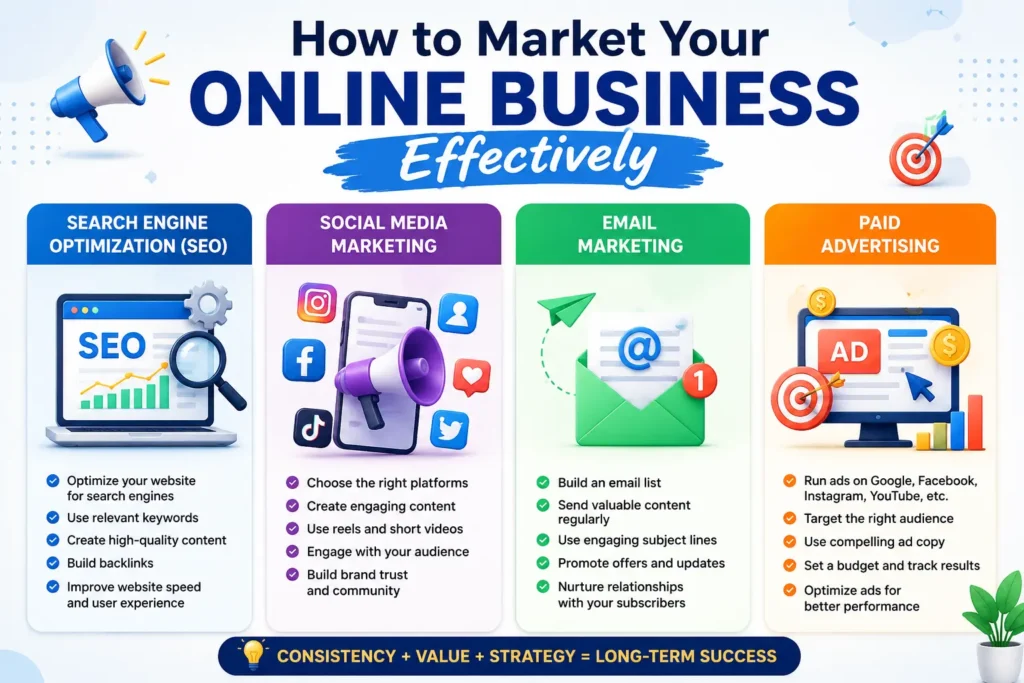
Search Engine Optimization (SEO)
SEO helps websites attract free organic traffic from search engines.
Good SEO involves:
- Writing useful content
- Optimizing page structure
- Improving loading speed
- Using relevant keywords naturally
- Creating internal links
Many website owners expect SEO results within a few weeks. In reality, strong rankings often take months of consistent publishing.
Patience is important.
Social Media Marketing
Content that performs well usually:
- Solves problems
- Educates quickly
- Entertains viewers
- Feels relatable
People connect more with authenticity than perfect production quality.
A simple helpful video recorded clearly often outperforms heavily edited content with little value.
Email Marketing
Email lists are valuable because you own the audience connection directly.
Unlike social platforms, algorithms cannot suddenly reduce your reach completely.
Useful email content includes:
- Tips
- Updates
- Tutorials
- Product recommendations
- Free resources
Avoid sending only promotional emails because audiences lose interest quickly.
Paid Advertising
Paid ads can accelerate growth when used correctly.
Popular platforms include:
- Google Ads
- Instagram Ads
- Facebook Ads
- YouTube Ads
However, beginners should avoid spending heavily before validating their products or services first.
Essential Tools That Help Online Businesses Grow
Canva
Useful for creating graphics, thumbnails, and social media designs.
WordPress
One of the most powerful website platforms for blogs and business websites.
Email Marketing Software
Tools like Mailchimp or ConvertKit help automate email campaigns.
Productivity Tools
Platforms like Notion, Trello, and Slack improve organization and communication.
Automation becomes increasingly important as businesses scale.
Common Mistakes Beginners Make
Chasing Too Many Ideas
Many beginners constantly switch niches before giving any strategy enough time to work.
Consistency usually beats constant experimentation.
Ignoring Content Quality
Publishing low-value content only to target keywords rarely works long term anymore.
Search engines increasingly prioritize expertise, usefulness, and user satisfaction.
Expecting Instant Results
This is probably the biggest mistake.
Some online businesses grow quickly, but most successful brands are built gradually over time.
People who stay consistent during slow periods often outperform those chasing shortcuts.
Tips for Long-Term Growth
Focus on Trust First
Customers buy from businesses they trust.
Simple things matter:
- Honest communication
- Clear pricing
- Helpful content
- Fast responses
- Reliable support
Trust compounds over time.
Improve Customer Experience
A confusing website or slow response time can reduce sales significantly.
Small improvements in user experience often increase conversions more than expensive marketing campaigns.
Learn to Delegate
Trying to handle everything alone eventually limits growth.
As revenue increases, outsourcing repetitive tasks allows more focus on strategy and expansion.
The Future of Online Businesses
Online businesses will continue growing because digital behavior is now part of daily life.
Artificial intelligence, automation, and remote work are creating new opportunities every year.
However, one thing remains unchanged: businesses that genuinely help people will always have an advantage.
Technology changes quickly, but trust and value remain timeless.
Conclusion
Starting an online business from home is one of the most accessible opportunities available today. You do not need a massive budget, expensive office, or perfect conditions to begin.
What matters most is choosing the right niche, understanding your audience, learning continuously, and staying consistent during the early stages.
Many people search online every day for answers related to How to make money online, but sustainable success usually comes from solving problems, building trust, and improving over time.
The good news is that beginners can still Earn money online without investment by using skill-based services, content creation, freelancing platforms, and free digital tools.
Start small if necessary. Learn while building. Most successful online businesses began with simple first steps and steady progress.
Frequently Asked Questions (FAQs)
1. What is the best online business for beginners?
Freelancing, blogging, affiliate marketing, and selling digital products are some of the best online business ideas for beginners. These models usually require lower startup costs and allow people to start with skills they already have.
2. Can I start an online business with no money?
Yes, many beginners start with free platforms, social media accounts, and skill-based services before investing in paid tools or advertising. In fact, some people successfully earn money online without investment by offering freelance services or creating content consistently.
3. How long does it take to earn income online?
The timeline depends on the business model, consistency, and strategy. Freelancers may earn within a few weeks, while blogs, YouTube channels, and affiliate websites often take several months before generating steady income.
4. Do online businesses require technical skills?
No, many online businesses can be started without advanced technical knowledge. Website builders, e-commerce tools, and content platforms are now designed to be beginner-friendly, making it easier for non-technical users to get started.
5. Is starting an online business from home sustainable long term?
Yes, online businesses can become long-term income sources when they focus on solving real problems and building trust with customers. Many successful entrepreneurs started small from home before growing their businesses over time.